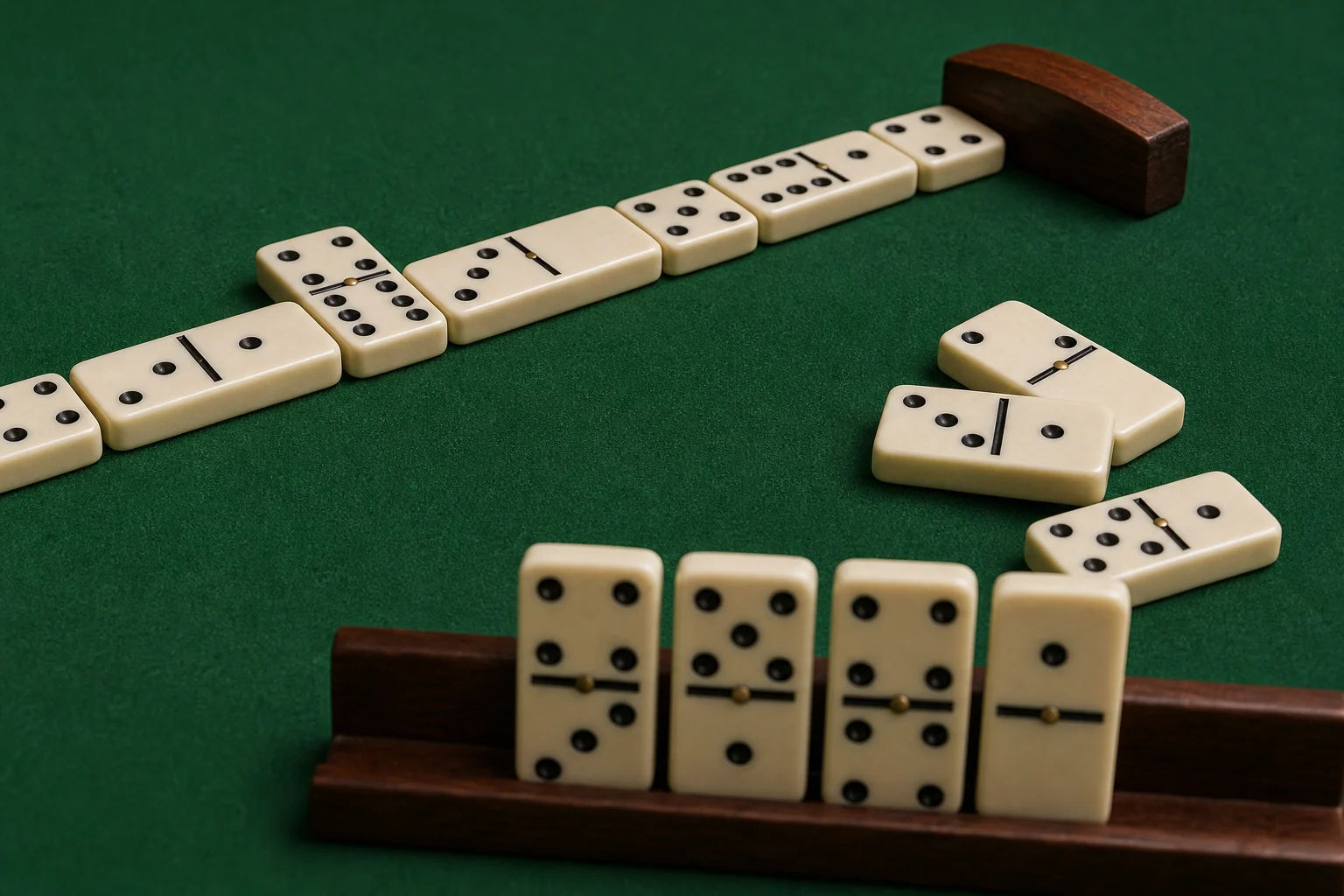
Most dominoes mistakes do not look dramatic when they happen. A player places a legal tile, the board accepts it, and the turn moves on. The problem appears later, when that move leaves a double stranded, gives the next player an easy finish, or removes the only number that connected the hand. Avoiding these mistakes is less about memorizing tricks and more about building better habits.
Online dominoes can make weak habits easier to repeat because turns are fast and the interface handles the rules. That convenience is useful, but it can also hide the reason a round was lost. The mistakes below are common because they are legal, tempting, and easy to overlook.
Mistake 1: Playing the First Legal Tile
The first matching tile is not automatically the best tile. If the board shows two and five, and you can play both, compare the results. One move might leave you with several playable routes, while the other might leave your remaining tiles dependent on a single number. The legal move that looks quickest can become expensive two turns later.
A better habit is to pause for a short scan. Which move keeps the most values alive? Which move lowers your pip risk? Which move makes the next player less comfortable? You do not need a long calculation every turn, but you should know why you chose one legal tile over another.
Mistake 2: Stranding Doubles
Doubles are easy to trap because they need their exact number to be open. If you hold double-three and no other threes, you have an unsupported double. That tile should stay in your mind as a risk until you play it. If the three end disappears and never returns, the double may sit in your hand until someone else wins.
Supported doubles are safer. If you have double-three plus three-five and three-six, you can often wait because you have multiple ways to work with threes. The mistake is treating every double the same. Unsupported doubles usually need earlier attention; supported doubles can become useful tempo tiles later.
Mistake 3: Ignoring Opponent Passes
A pass is one of the strongest clues available. If a player passes when the board shows ones and fours, they probably lack those numbers at that moment. Many casual players ignore this and keep playing only from their own hand. Stronger players remember the pass and look for a chance to reopen the same value.
This does not mean you should damage your own hand just to attack a player. It means passes should influence close decisions. If two moves are equally good for you, choose the one that brings back a number an opponent already missed. Small pressure like this can create blocked turns and force extra draws.
Mistake 4: Carrying Too Many Pips Late
High-value tiles are dangerous when the round is nearly over. Double-six, six-five, and double-five can swing the score if another player goes out. Beginners often save them for a perfect moment, but the perfect moment may never arrive. If a heavy tile fits without destroying your hand, playing it can be the practical choice.
The key is timing. Dumping a heavy tile that leaves you with no playable route can be just as bad as keeping it. Look for moves that reduce pip count while preserving flexibility. If you can lower your risk and still keep an answer for the next turn, that is usually a strong move.
Mistake 5: Helping the Next Seat Too Much
Dominoes is turn-based, so the player after you benefits first from the board you leave. If that player has repeatedly played quickly on sixes, leaving a six open may give them exactly what they want. If they just passed on twos, leaving a two open may be safer. The next seat matters because your move is their opportunity.
This is especially important when a player has only one or two tiles left. Before giving them an obvious number, ask whether the move is necessary. Sometimes you must open a dangerous end because it is your only legal play. But when you have alternatives, do not hand over an easy finish without getting something valuable in return.
Mistake 6: Forgetting the Boneyard
In draw games, the boneyard changes strategy. A player who cannot move may draw into a playable tile, but they also collect more pips and more possible exits. If the boneyard is still large, blocking one player may not be decisive. If it is nearly empty, forcing a miss becomes much stronger.
Beginners often treat drawing as a minor delay. In reality, every draw affects the round. More tiles in an opponent's hand can make it harder for them to go out, but it can also give them the exact number they need. Watch how many tiles remain and adjust your expectations.
Mistake 7: Playing Without an Exit
The most common strategic error is leaving yourself with no likely next move. A tile may solve the current board while destroying your future. If you play your only four and your remaining tiles need fours to connect, you may have created your own block.
Before placing a tile, look at what remains in your hand. If your move removes the bridge between two groups of tiles, another option may be better. Practice this exit check whenever you play dominoes online from the homepage, and many avoidable losses will become easier to spot before they happen.