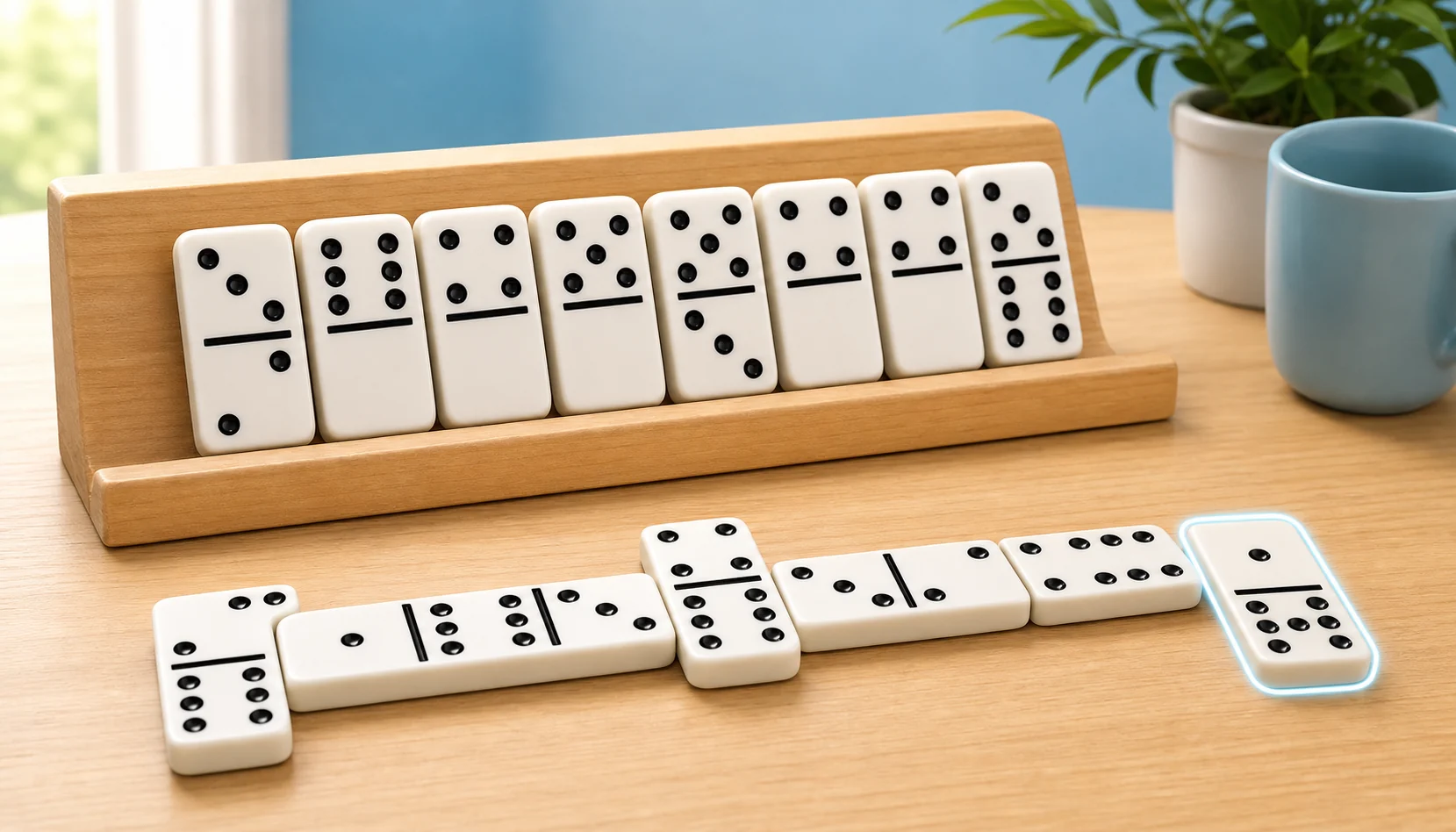
Dominoes feels simple in the first few minutes because every turn asks you to match a number. The challenge appears after that. Beginners get stuck because they play legal tiles without thinking about the shape of the hand, the open ends, or the player who moves next. A good beginner habit is to slow the decision down just enough to see the whole board.
You do not need advanced counting to improve quickly. Most early progress comes from a small set of repeatable habits: read the open ends first, keep more than one route through your hand, respect heavy tiles, and notice when opponents cannot play. These tips make online dominoes easier to understand and make your choices feel less random.
Read the Board Before Your Hand
Start every turn by naming the two open numbers. If the board ends are four and six, say that to yourself before checking which tiles fit. This prevents tunnel vision. New players often stare at their hand first and play the first match they notice, even when another tile would leave a much stronger position.
After naming the open ends, compare all legal moves. Ask what number each move would leave behind. A four-three and a six-one may both be legal, but they lead to different boards. If one move leaves a number you still hold and the other leaves a number you cannot use, the first move usually gives you a better next turn.
Keep Your Hand Flexible
Flexibility means having tiles that connect to several possible board states. A hand with three different playable values is healthier than a hand that depends on one number. When you have a choice, avoid using the only tile that connects two important parts of your hand unless it solves an urgent problem.
For example, if your only six is six-two and you also have several twos, playing six-two might remove your only access to sixes but strengthen your two route. That could be good or bad depending on the board. The point is to notice the tradeoff before you move. Dominoes becomes more strategic as soon as you stop treating every matching tile as equal.
Do Not Save Heavy Tiles Too Long
Tiles with many pips are risky near the end of a round. If another player goes out, the pips left in your hand may become points against you. Beginners often hold double-six, six-five, or double-five because they look powerful, but a heavy tile is only useful if you can actually play it.
When a heavy tile fits cleanly and does not ruin your hand, consider playing it. This is especially true if the matching number has appeared several times already. The longer the round continues, the greater the chance that a number will close and your heavy tile will become dead weight.
Learn From Passes
A pass is one of the clearest signals in dominoes. If an opponent cannot play when the board shows blanks and threes, they probably lack those values at that moment. You may not know their whole hand, but you have learned something useful. If you can later return the board to one of those numbers without hurting yourself, you may force another pass.
Online interfaces sometimes make passes quick, so pay attention to the turn order. If a player draws before playing, they were missing the open values. If they pass after the boneyard is empty, those values may be especially strong defensive targets. This habit alone can improve beginner results because many casual players ignore the information completely.
Use Doubles Carefully
Doubles are memorable, but they are not always easy to play. If you hold double-four and no other fours, you need a four open before that tile can leave your hand. Waiting too long can trap it. If you hold double-four plus several other fours, you have more control and can choose the timing more comfortably.
Some rule sets give special scoring value to doubles, while others treat them as regular tiles. Either way, the beginner rule is practical: unsupported doubles should not be ignored. Look for a safe chance to play them before the board moves away from their number.
Think One Turn Ahead
You do not need to predict the whole round. Start by predicting one turn. After you choose a tile, what are you hoping the board looks like when your next turn arrives? If your current move leaves you with no answer to the most likely reply, it may be too risky. If it leaves two possible answers, it is usually safer.
This one-turn habit helps in every version of dominoes. It also keeps you from making emotional moves, such as playing a tile only because it is heavy or only because it fits. A good move connects the current board to a playable future hand.
Build a Simple Practice Routine
For the next few rounds, focus on one skill at a time. In one game, watch only open ends. In another, focus on playing heavy tiles before the finish. In the next, track every pass. Separating these habits makes them easier to learn, and after a while they combine naturally.
The more you play, the more automatic the scan becomes. Read the board, compare legal moves, protect your exits, and learn from every pass. When you want a simple place to refresh those habits before another round, return to the main dominoes game page and practice with a clearer plan.