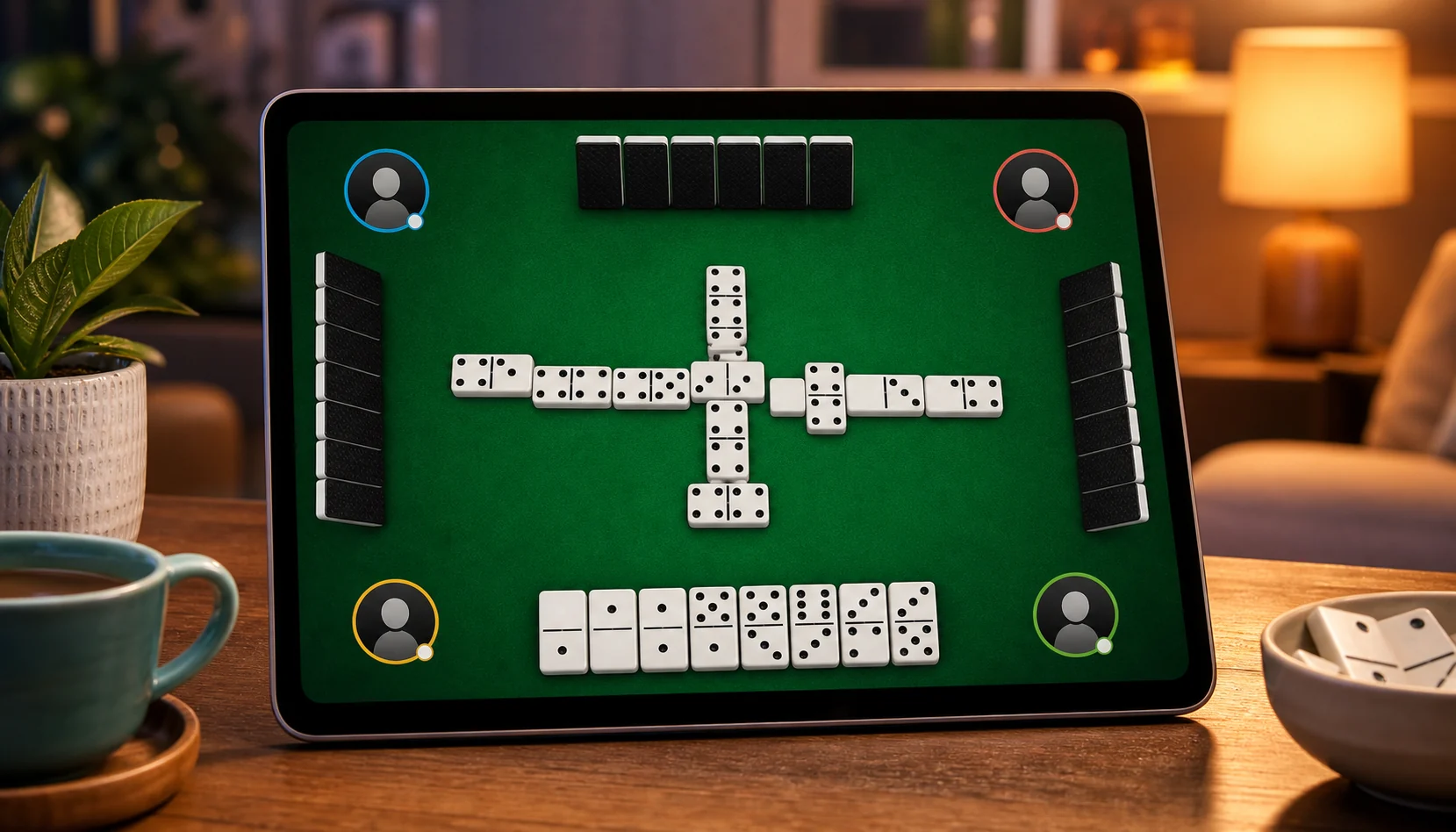
Playing dominoes online with friends is different from joining a random table. The rules may be the same, but the experience is more social, more flexible, and often more useful for learning. Friends can agree on a comfortable pace, pause between rounds, and talk through decisions without turning the game into a lecture.
The best friend games start with clear expectations. Decide which version you want to play, how long the match should last, and how strict the turn timer should be. A few simple choices before the first tile prevent confusion later, especially when some players know dominoes well and others are still learning the basics.
Choose the Right Rule Set
Before sending invites, agree on the format. Draw dominoes is friendly for newer players because a missed move can be solved by taking tiles from the boneyard. Block dominoes is sharper because a player who cannot move must pass. Scoring versions that reward multiples of five can be exciting, but they add another layer of calculation.
If your group has mixed experience, start simple. Use a basic draw or block format, play a few short rounds, and explain scoring after each finish. Once everyone understands open ends, doubles, and blocked rounds, you can move to more tactical settings. The goal is to make the game smooth enough that players focus on decisions rather than rule confusion.
Set a Comfortable Pace
Turn timers matter more than many players expect. A short timer keeps games lively, but it can pressure beginners into clicking the first legal tile. A longer timer gives people time to read the board, compare options, and ask quick questions. For a friendly table, choose a pace that suits the least experienced player.
Once everyone is comfortable, you can shorten the timer for a faster match. The right pace depends on the group. Some friends enjoy relaxed conversation between turns. Others prefer quick rounds and immediate rematches. Online dominoes works best when the room settings match the way your group actually wants to play.
Agree on Scoring Before the Match
Scoring should never be a surprise. Decide whether the match ends at a target score, after a fixed number of rounds, or when the group simply wants to stop. If points are awarded from remaining pips, make sure everyone understands why heavy tiles matter. If the version scores open-end totals, explain when those points are counted.
Clear scoring makes close games more enjoyable. Players know when to take risks, when to block, and when to reduce pip count. Without clear scoring, one player may think the goal is only to go out while another is planning around point totals. A shared scoring plan keeps the table fair.
Use Voice or Chat Without Slowing the Table
Dominoes with friends is naturally social. Voice chat can make the game feel like a real table, while text chat works well for quick comments between turns. The only caution is to avoid giving active strategy advice that changes the fairness of the round. It is fine to explain a rule; it is different to tell someone exactly which tile to play.
A good compromise is to discuss decisions after the round ends. Talk about the block that worked, the double that got trapped, or the moment someone opened a number that helped the next player. These short reviews help everyone improve without interfering with live play.
Balance Competition and Learning
Friend games are ideal for practice because the pressure is lower. New players can ask why they had to draw, why a round ended blocked, or why a heavy tile hurt their score. Experienced players can test strategy without worrying about rankings or unfamiliar table behavior.
At the same time, friendly does not have to mean careless. The game becomes more interesting when everyone tries to read passes, manage doubles, and plan the endgame. A relaxed table can still produce sharp tactical rounds, especially once the group has played together enough to recognize each other's habits.
Handle Different Skill Levels
If one player is much stronger than the rest, use settings that keep the table inviting. Shorter matches reduce frustration. Open discussion after rounds helps newer players see what happened. Rotating seats or partners can also keep multiplayer games fresh, because turn order changes who benefits from each move.
For beginners, focus on three ideas first: match the open ends, keep the hand flexible, and avoid holding heavy tiles too long. For stronger players, add deeper goals such as tracking passes and controlling the number that reaches the next seat. This layered approach lets everyone play the same game while learning at an appropriate level.
Create Small Table Traditions
Regular friend groups often develop their own rhythm. Maybe you play to a short score during lunch, run longer weekend matches, or replay the same format until someone wins a set. These small traditions make online dominoes more engaging because the game becomes a shared routine rather than a one-off match.
You can also rotate who chooses the rules. One player might pick block dominoes, another might choose a draw game, and another might request a slower timer for practice. Variety keeps the game fresh while still staying within the familiar dominoes structure.
Keep the Game Fair and Clear
Fairness comes from consistency. Do not change scoring halfway through a match. Do not switch from draw rules to pass rules during a round. If the interface enforces a rule, let it stand unless everyone agrees to restart. Clear boundaries prevent small disagreements from taking over the table.
When everyone understands the setup, social dominoes becomes fast, tactical, and easy to return to. Use the main site for free dominoes refreshers before inviting friends to a longer session, then bring the same clear rules and steady pace into your private games.